Place
Atlin
British Columbia's last gold rush town, on the shore of the province's largest natural lake.
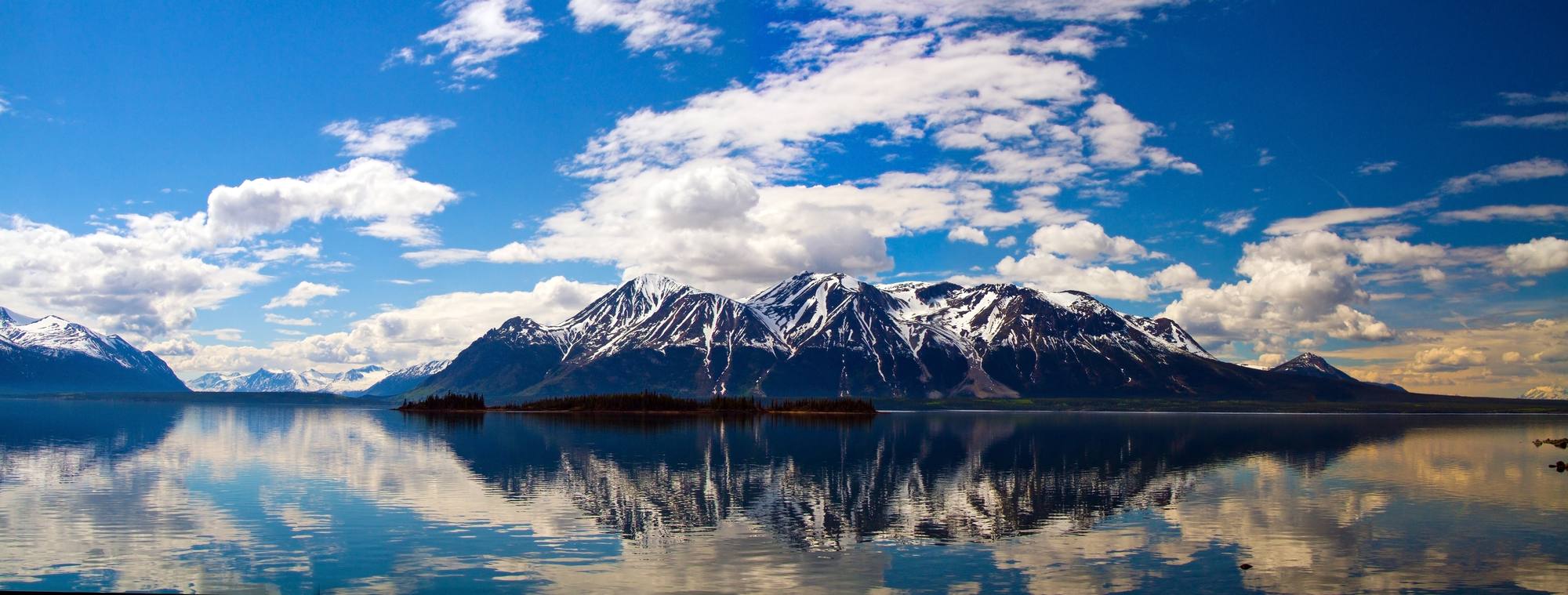
Atlin lies in the territory of the Taku River Tlingit First Nation. Remote and closer to the Yukon than to any city, Atlin sits on the mountainous eastern shore of Atlin Lake, known for its pale, opaque blue water.
Explore
The Land, the Gold, and the Town
The Land
Ice, Water and Mountains
British Columbia’s last gold-rush town sits on the shore of the province’s largest natural lake. It lies in the territory of the Taku River Tlingit First Nation.
Read more →1898
The Last Rush
In early 1898, Fritz Miller and Kenneth McLaren left the Klondike Trail, crossed the ice of Taku Arm and Atlin Lake, and discovered gold on Pine Creek that flows directly past the community of Atlin.
Read more →History
During The Rush
Only a few hundred stayed through the first long, frigid winter, but in the spring of 1899, thousands arrived via the White Pass railway and over the ice.
Read more →The Boom After the Boom
After The Rush
Discovery emptied. Atlin’s businesses closed, and the population shrank to a few hundred people. Fires in 1901 and 1914 took much of the townsite.
Read more →Today
Atlin Now
About four hundred people live year-round, with more in the summer. World-class fishing and eco-tourism draw tourists to remote shoreline campsites that require zero footprint, including low-impact backcountry hiking, kayaking, and canoeing.
Read more →Learn More
More articles and photography on Atlin are on their way.